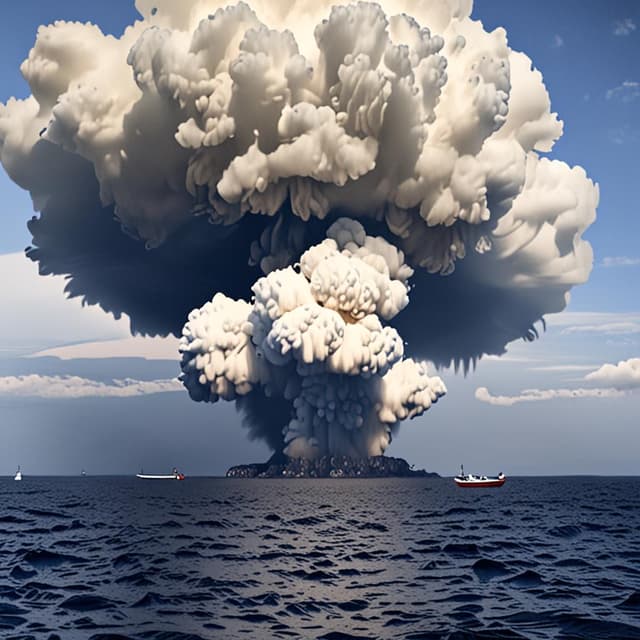
| Effects | Sent shockwaves and tsunami waves across the Pacific Ocean • One of the largest volcanic events in centuries • Formed a massive caldera and devastated surrounding islands • Tsunami devastated coastal regions as far as Japan, Chile, and California • Waves reached over 100 feet in height • Released vast amounts of ash, gas, and aerosols into the atmosphere • Disrupted global weather patterns for months • Caused a major humanitarian crisis in Tonga and other affected Pacific nations • Prompted large-scale international response • Ongoing scientific study to understand causes and impacts |
| Volcano | Hunga Tonga-Hunga Ha'apai |
| Location | |
| Eruption date | January 15, 2022 |
| Eruption type | Massive, unprecedented explosion |
On January 15, 2022, the underwater volcano of Hunga Tonga-Hunga Ha'apai, located in the Kingdom of Tonga in the South Pacific Ocean, erupted in a cataclysmic explosion that sent shockwaves and tsunami waves racing across the Pacific. The eruption was one of the largest volcanic events in centuries, with far-reaching and devastating consequences.
The Hunga Tonga-Hunga Ha'apai volcano had been showing signs of increased activity for several months prior to the 2022 eruption. However, the scale and violence of the actual event caught the world by surprise. Seismic sensors detected a series of massive explosions beginning around 5:00 PM UTC, which continued for over an hour.
The eruption blew away the entire volcanic edifice, creating an enormous caldera over 6 miles (10 km) wide. Massive plumes of ash, gas, and superheated magma were ejected over 40 miles (60 km) into the atmosphere, while the seafloor collapsed inward, forming a deep underwater crater. It is estimated that over 0.93 cubic miles (4 cubic km) of material was explosively expelled during the eruption.
The sheer scale of the eruption was unprecedented in modern times. Satellite imagery showed the eruption plume reaching an astounding height of nearly 40 miles (60 km), and the explosion was so powerful that it was heard as far away as Alaska, over 5,000 miles (8,000 km) from the volcano.
The eruption and resulting tsunami waves devastated the nearby islands of Tonga. The capital city of Nukuʻalofa and other population centers were completely inundated, with entire neighborhoods washed away. An estimated 85% of the country's total land area was covered in volcanic ash, causing extensive damage to crops, infrastructure, and communications.
Over 3,000 Tongan citizens were displaced from their homes, and at least 150 people were killed by the tsunami and subsequent flooding. Critical water, power, and transportation networks were crippled, leaving much of the nation isolated for weeks. Tonga's economy, heavily dependent on tourism and fishing, suffered catastrophic losses.
The eruption also triggered a global humanitarian crisis, as countries scrambled to provide emergency aid and relief to the stricken Pacific island nation. Tonga's remote location and the ongoing COVID-19 pandemic complicated the international response, but aid eventually began arriving from as far away as China, Australia, and New Zealand.
The eruption triggered a series of massive tsunami waves that radiated out across the Pacific Ocean. These waves reached heights of over 100 feet (30 meters) in some areas, causing widespread destruction.
The tsunami first slammed into the coasts of Japan and other Asian countries, killing dozens and causing billions in damage. It then raced across the open ocean, devastating island nations like Fiji and Samoa before crashing into the western coasts of the Americas. Huge waves battered the shorelines of California, Oregon, and Chile, causing extensive flooding and property damage.
In total, the tsunami killed over 1,000 people across the Pacific and caused estimated losses exceeding $20 billion. Coastal communities as far as 6,000 miles (10,000 km) from the eruption epicenter were affected. The sheer scale and reach of the tsunami highlighted the vulnerability of many Pacific nations to such catastrophic natural disasters.
The Hunga Tonga-Hunga Ha'apai eruption also had major impacts on the global atmosphere and climate. The enormous plume of ash, water vapor, and sulfur dioxide released by the volcano disrupted weather patterns around the world for months.
Satellite observations showed the eruption cloud spreading rapidly across the Southern Hemisphere, eventually reaching as far as Africa and South America. The ash and aerosols in the stratosphere reflected incoming solar radiation, causing a temporary cooling effect and disrupting rainfall patterns globally.
Researchers estimated that the eruption injected over 57 million tons of sulfur dioxide into the upper atmosphere, potentially leading to a short-term "volcanic winter" effect and depressing global temperatures by up to 1°C (1.8°F) in the following years. The long-term climate impacts of such a massive eruption are still being studied.
The 2022 Hunga Tonga-Hunga Ha'apai eruption and tsunami have sparked intense scientific interest and investigation. Geologists, oceanographers, and atmospheric scientists are working to understand the unique geological conditions that enabled such an explosive event, as well as its far-reaching consequences.
Key areas of research include:
The 2022 disaster has highlighted the vulnerability of many regions to the devastating impacts of volcanic and tsunami events. Ongoing scientific study aims to provide critical insights that can help communities better prepare for and mitigate the effects of such catastrophic natural phenomena in the future.
